Artificial intelligence has become one of the most important areas of technology, but behind every modern AI system there is a subject that many people do not immediately think about: probability.
AI systems often need to deal with uncertainty. A machine-learning model may need to determine whether an image contains a particular object, estimate the likelihood of an event, identify patterns in data, or make predictions when the available information is incomplete.
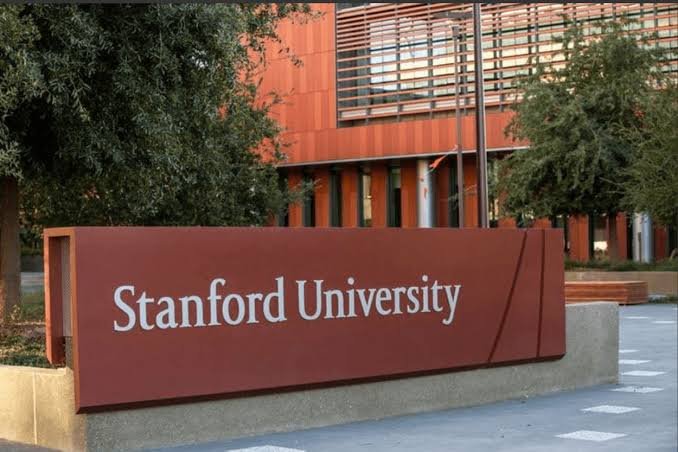
Stanford University is offering an opportunity for people interested in AI to learn the mathematical ideas behind modern artificial intelligence through a free online course called Probability for Artificial Intelligence.
The course is particularly interesting because it is designed to be accessible to people who are curious about how AI works. According to Stanford’s official course website, the October 2026 class will be available online for free, and participants only need comfort with algebra as the stated mathematical background.
For people who want to understand AI beyond simply using popular AI applications, the course provides an opportunity to explore one of the mathematical foundations behind the technology.
What Is the Stanford Probability for Artificial Intelligence Course?
The course is called Probability for Artificial Intelligence, or PAI.
Stanford describes probability as the language behind modern AI. The purpose of the course is to help learners understand the probability concepts that support modern machine learning and artificial intelligence.
Unlike a course that focuses only on how to use an AI tool, this program is intended to explain some of the underlying mathematics.
The course is scheduled to begin on October 9, 2026. Stanford says that applications are due during the last week of September.
One of the notable features is that the course is online. This means participants can take part from anywhere with an internet connection rather than needing to travel to Stanford’s campus in California.
Stanford also states that the course is free.
That makes the program particularly interesting for learners who want to explore artificial intelligence without immediately committing to a traditional university degree program.
Who Can Take the Course?
The course is not presented as a program exclusively for computer science majors.
Stanford’s official course information says that it is intended for anyone curious about how AI really works. The stated mathematical requirement is comfort with algebra.
This is important because artificial intelligence can sometimes appear inaccessible to beginners.
Many AI courses require substantial programming or advanced mathematics. While more advanced AI education eventually requires mathematics, programming, statistics, and other technical skills, the Stanford PAI course provides an entry point focused specifically on probability.
A person who has never studied machine learning in depth may therefore find this type of course useful as a way to understand one of the concepts that appears repeatedly in AI.
How Long Is the Course?
The course is designed around a six-week learning period.
Stanford says students should expect to spend a few focused hours each week on the course.
This is different from a traditional full-time university program. Participants do not need to move to California or attend a four-year degree program to participate.
The flexible structure can make the course suitable for people who are working, studying another subject, or simply exploring artificial intelligence as a new area of interest.
However, flexible does not necessarily mean effortless.
Probability is a mathematical subject, and students should expect to spend time understanding concepts rather than simply watching videos.
The value of the course will depend heavily on how actively a learner participates and practices the material.
What Does Probability Have to Do With AI?
Probability is used when an AI system needs to reason about uncertainty.
Imagine an AI system looking at an image.
The system may not have absolute certainty about what is contained in the image. Instead, it can estimate probabilities associated with different possibilities.
The same general idea appears in many areas of machine learning.
For example, an AI model might analyze information and estimate the probability that a particular outcome will occur. Another system might use probabilities to classify information into different categories.
Recommendation systems, language technologies, computer vision, forecasting systems, and other machine-learning applications can involve statistical reasoning.
Understanding probability can therefore help students understand why AI systems make predictions rather than simply producing answers through a traditional set of manually written rules.
Why Learning the Mathematics Behind AI Matters
Many people interact with AI every day without knowing how the technology works.
A person might use an AI chatbot, an image generator, a recommendation system, or an automated translation service without understanding what happens behind the interface.
Learning the mathematical foundations can provide a different perspective.
Instead of treating AI as a mysterious technology, students can begin to understand the concepts used to develop and analyze these systems.
Probability is only one part of the larger AI field, but it is an important foundation.
Other areas include linear algebra, calculus, statistics, optimization, computer science, algorithms, and programming.
A beginner does not need to master everything at once.
Starting with one fundamental concept can make more advanced subjects easier to approach later.
Is This a Stanford University Degree?
No.
This distinction is important.
The Probability for Artificial Intelligence course is an educational course offered through Stanford’s online learning initiatives. It is not the same thing as enrolling in Stanford University’s undergraduate or graduate degree programs.
Completing the course should therefore not be described as earning a Stanford degree.
This is particularly important when discussing online courses because readers can sometimes confuse university courses, certificates, professional programs, and academic degrees.
Students should always check the official course page for the current requirements and completion details.
Is There a Certificate?
According to Stanford’s official course information, participants can receive a public portfolio of their work hosted by Stanford.
This is different from claiming that every participant receives a traditional Stanford University academic degree.
For someone building a learning portfolio, a public record of completed work can potentially be useful.
Students interested in technology careers can use projects and learning experiences to demonstrate what they have studied and what they can actually do.
However, learners should always understand exactly what credential or documentation a particular program provides before using it on a resume or professional profile.
Who Could Benefit From Learning Probability?
The course may be useful to several groups of learners.
1. Students Interested in AI
Students considering computer science, data science, machine learning, or artificial intelligence can use probability as an introduction to an important technical concept.
Understanding probability early may make future statistics and machine-learning courses easier to understand.
2. Programmers
Software developers who already know programming but have limited exposure to AI mathematics may benefit from learning how probability is used in intelligent systems.
Programming and mathematical understanding complement each other in machine learning.
3. Career Changers
People considering a transition into technology may want to explore AI before investing significant money in a degree or expensive training program.
A free introductory opportunity can allow someone to determine whether the subject genuinely interests them.
4. AI Enthusiasts
Even people who are not planning an AI career may find the subject interesting.
AI is increasingly present in education, business, healthcare, finance, entertainment, manufacturing, and other industries.
Understanding the basic principles can help people make more informed decisions when using AI technologies.
What Should Beginners Know Before Starting?
The most important thing is not to be intimidated by the word “probability.”
Probability is essentially a mathematical way of reasoning about uncertainty.
Basic examples are familiar from everyday life.
Weather forecasts, medical testing, sports predictions, insurance calculations, financial models, and scientific research all involve probability in different ways.
AI systems use similar concepts at much larger scales and often combine probability with enormous amounts of data and computational power.
A learner who understands basic algebra and is willing to practice mathematical concepts can begin developing the foundation needed for more advanced topics.
How Can This Course Help With Future AI Learning?
Artificial intelligence is a broad field.
After learning probability, a student might choose to explore statistics, machine learning, deep learning, neural networks, computer vision, natural language processing, or data science.
Stanford itself offers many courses and educational resources related to machine learning.
For example, Stanford’s CS229 course provides a broad introduction to machine learning and statistical pattern recognition. Its topics include supervised learning, unsupervised learning, neural networks, learning theory, reinforcement learning, and other applications. The course has substantial prerequisites, including programming, probability, multivariable calculus, and linear algebra.
That difference illustrates an important learning path.
A beginner-friendly probability course and an advanced machine-learning course are not interchangeable. They can instead represent different levels of preparation.
Stanford’s Broader Online Learning Opportunities
The Probability for Artificial Intelligence course is part of a much larger Stanford educational ecosystem.
Stanford says that its online learning reaches learners around the world, with more than 1.4 million people accessing Stanford virtual instruction each year.
The university offers educational opportunities in areas including engineering, artificial intelligence, humanities, health, and other disciplines.
Stanford also provides free and low-cost learning opportunities, although individual courses and programs can have different eligibility requirements, costs, schedules, and credentials.
For prospective students, the safest approach is to check the official Stanford page for each specific course rather than assuming that every Stanford-branded online course has the same structure.
How to Apply for the 2026 Course
According to the official Stanford Probability for Artificial Intelligence website, the October 2026 class begins on October 9.
Applications are due during the last week of September.
The course is online, meaning participants can join from anywhere with internet access.
The official course information also states that learners should be comfortable with algebra.
Anyone interested should check the official Stanford course website before applying because dates, application requirements, and course details can change.
Why Free University Courses Can Be Valuable
University education can be expensive, especially when it involves relocating, tuition, housing, and other costs.
Free online university learning opportunities provide another way for people to explore subjects.
They do not replace every part of a university degree.
A traditional degree provides structured academic progression, faculty interaction, classmates, examinations, credentials, and access to many university resources.
However, online courses can be useful for discovering whether a subject is worth studying further.
For example, someone who completes an introductory AI course may realize that they enjoy mathematics and programming. That person could then investigate a more advanced degree or professional program.
Another learner may discover that AI is not the right field for them.
Both outcomes can be useful because education is also about discovering what interests and suits you.
A Practical Learning Path for Beginners
Someone interested in artificial intelligence does not necessarily need to begin with advanced deep-learning mathematics.
A practical progression could look like this:
First, learn basic algebra and programming.
Next, develop an understanding of probability and statistics.
Then study basic machine-learning concepts.
After that, explore algorithms, neural networks, and deep learning.
Finally, learners can choose a specialization such as natural language processing, computer vision, robotics, recommendation systems, or another AI field.
The Stanford Probability for Artificial Intelligence course can fit into the early mathematical stage of such a learning journey.
Final Thoughts
Artificial intelligence is often presented as a highly complicated technology, but it is built from many individual ideas.
Probability is one of those foundational ideas.
Stanford University’s Probability for Artificial Intelligence course offers an opportunity for people to explore the mathematical foundation behind modern AI through a free online program scheduled to begin on October 9, 2026.
The course is designed for people who are curious about AI and states that comfort with algebra is enough as the mathematical prerequisite. Stanford also says that participants can build a public portfolio of their work.
For students, programmers, career changers, and technology enthusiasts, the course can provide an opportunity to understand an important AI concept before moving toward more advanced subjects.
Most importantly, learners should remember that completing a free online course is not the same as earning a university degree. The real value comes from understanding the material, completing the work, and using the knowledge to continue learning.
For anyone interested in the future of artificial intelligence, learning the mathematics behind the technology can be a meaningful place to start.